Mongolian Naadam Festival
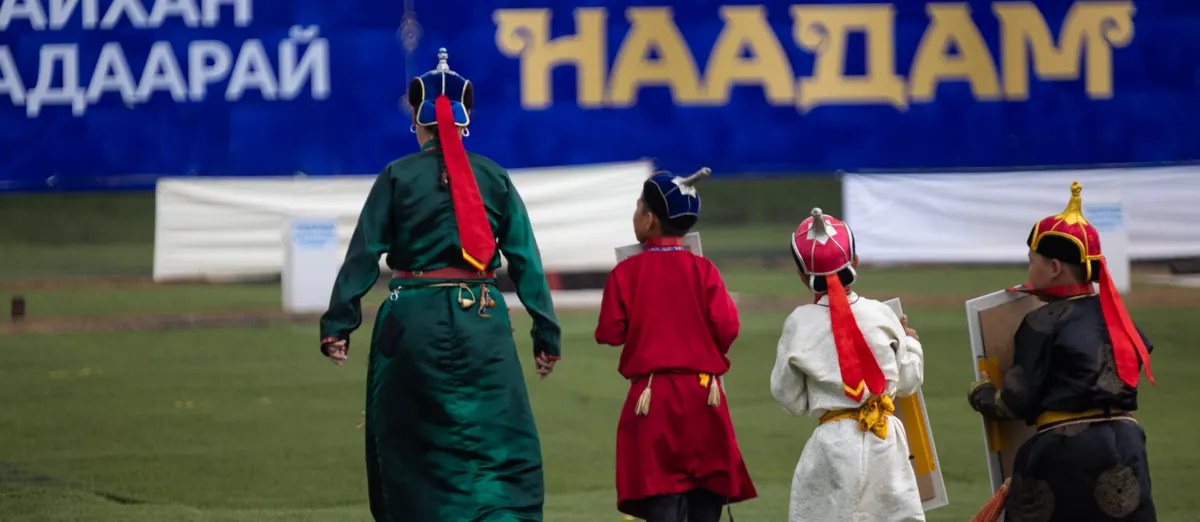
Mongolia's grandest national celebration is the Naadam Festival. Naadam is the largest annual event that attracts the greatest attention from both international and domestic tourists. It is an event that has been celebrated at different times since the era of Genghis Khan, and it has been held annually between July 11th and 13th ever since 1922, when Sükhbaatar declared Naadam to be held on July 11th to commemorate the first anniversary of the revolution.
Therefore, the National Naadam Festival is organized at the Central Stadium in Ulaanbaatar annually from July 11th to 13th at a fixed time. In 2010, Naadam was inscribed on UNESCO's Representative List of the Intangible Cultural Heritage of Humanity. Following this, all provinces and counties across Mongolia celebrate their own local Naadam festivals, usually before or after the National Naadam. When scheduling these festivals, local authorities consider the conditions and circumstances of the local residents and the region, announcing the schedule just 2–3 weeks before the event. Some people enjoy participating in both local and national celebrations. Although the quality and scale of sports and events in rural Naadam festivals are smaller compared to those in Ulaanbaatar, you have the opportunity to experience the events up close. Naadam highlights Mongolia's "Three Manly Sports": horse racing, wrestling, and archery. Each Naadam begins with an opening ceremony featuring horsemen, wrestlers, athletes, musicians, monks, and dancers.
The National Naadam Festival takes place in Ulaanbaatar
On the first day around 9 a.m., a solemn flag ceremony takes place in front of the State Parliament House. Representatives from Mongolia's nine traditional ethnic groups, dressed as Genghis Khan’s standard bearers, carry the historic flag from the Parliament House to the Naadam Stadium, officially marking the start of the festival. At the stadium, around 11 a.m., the grand opening ceremony begins, featuring spectacular musical performances that highlight Mongolia’s rich history and culture, and the President formally declares the festival open. During the first two days, the three traditional sporting events—wrestling, archery, and horse racing—are held. Over the three-day festival, only a limited number of restaurants and shops remain open. While most tourism-related venues operate as usual, nearly all local residents take time off, resulting in the closure of privately-owned businesses. Additionally, all banks are closed during the Naadam holiday, so international transactions will not be processed.
Mongolian Traditional Wrestling
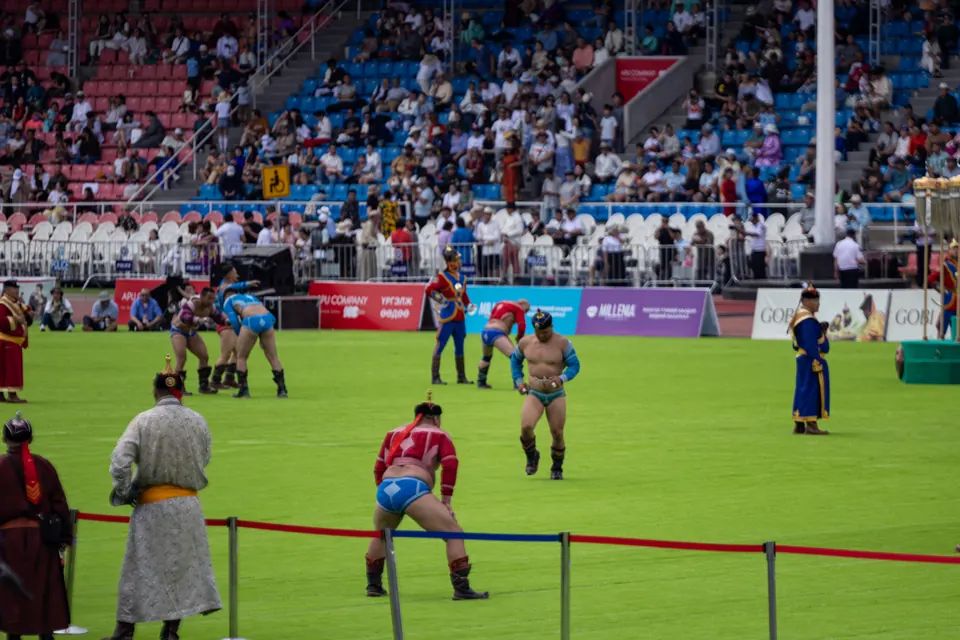
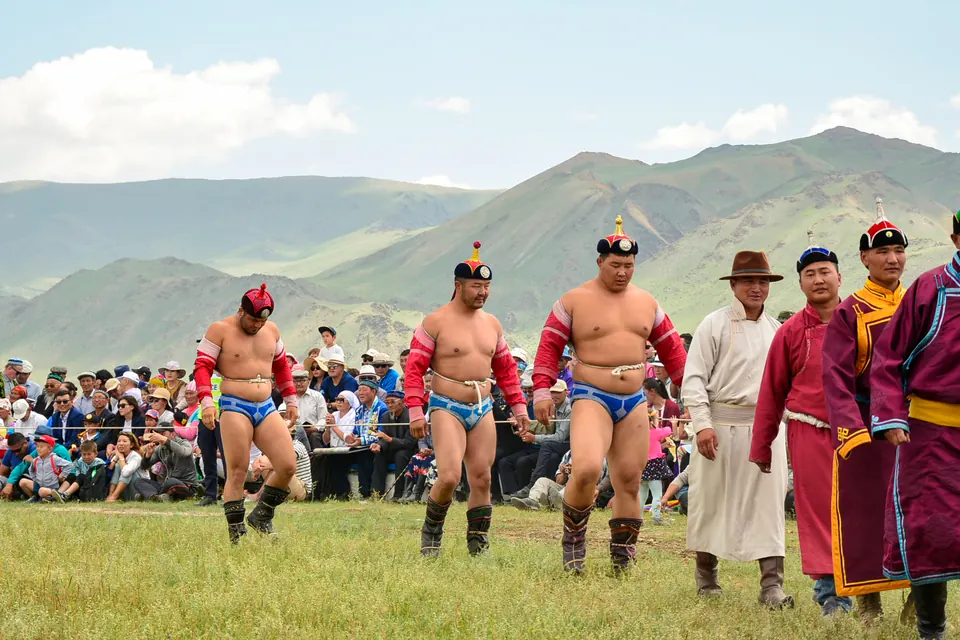
The wrestling competition begins in the central stadium on the first day around midday and is one of the most exciting and photogenic events. Mongolian wrestling differs from wrestling styles found elsewhere in that there are no weight classes and no time limits. A match ends only when one wrestler touches the ground with any part of their body other than the soles of their feet or the palms of their hands. Each wrestler has his own attendant (zasuul), who chants the wrestler’s title and praises his achievements. After losing, a wrestler performs a gesture of respect called "takhimaa ogoo"—passing under the winner’s right arm—and then walks around the ceremonial flagpole in the arena before performing the "eagle dance" (devekh) as a final salute. In Ulaanbaatar, watching wrestling at the main stadium often means viewing from a distance, depending on seating. However, at rural Naadam festivals held in open fields, spectators can experience the matches much more closely.
Mongolian Horse Racing
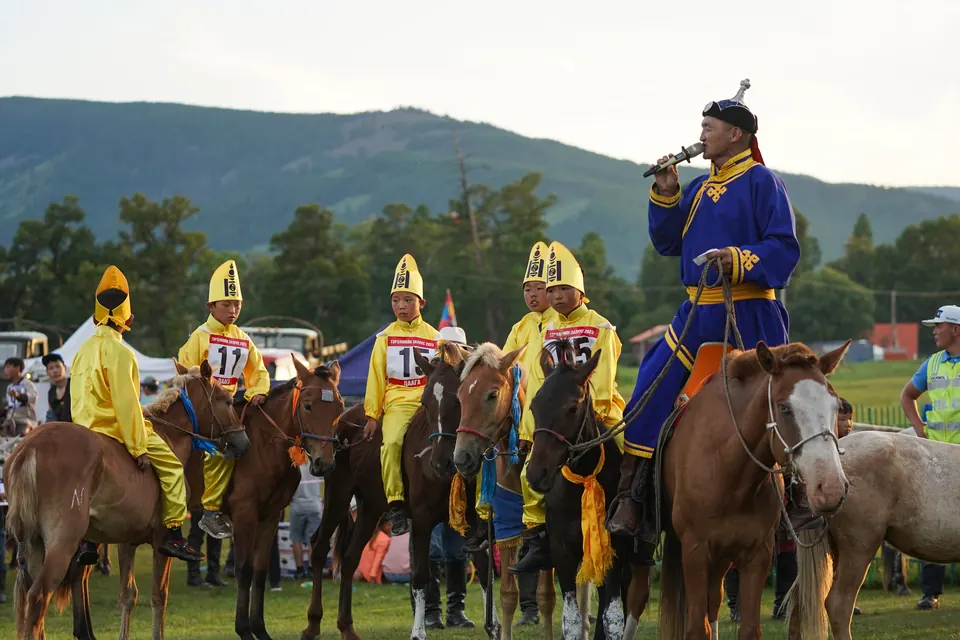
The spirit and grandeur of the Naadam Festival are perhaps best captured in the horse racing event, held at a place called “Khui Doloon Khudag” (Seven Wells of Khui), located about 30 km west of Ulaanbaatar. The races, which range from 15 to 30 kilometers in length, are divided into categories based on the age and skill level of the horses. A highlight is the participation of young jockeys, typically aged 9 to 12, who showcase remarkable courage and skill, embodying the future of this centuries-old tradition. In the final moments of victory, the winning horse is adorned with a blue ceremonial scarf—a symbol of honor and good fortune—and is showered with airag (fermented mare’s milk), turning the celebration into a shared moment of national pride. While the main races take place near the capital, similar events are held across the Mongolian countryside, adapted to local landscapes and organized in open plains. More than just a sport, horse racing is a profound expression of Mongolian identity—a living ritual that connects the people to their history, their land, and their enduring nomadic spirit.
Mongolian Archery
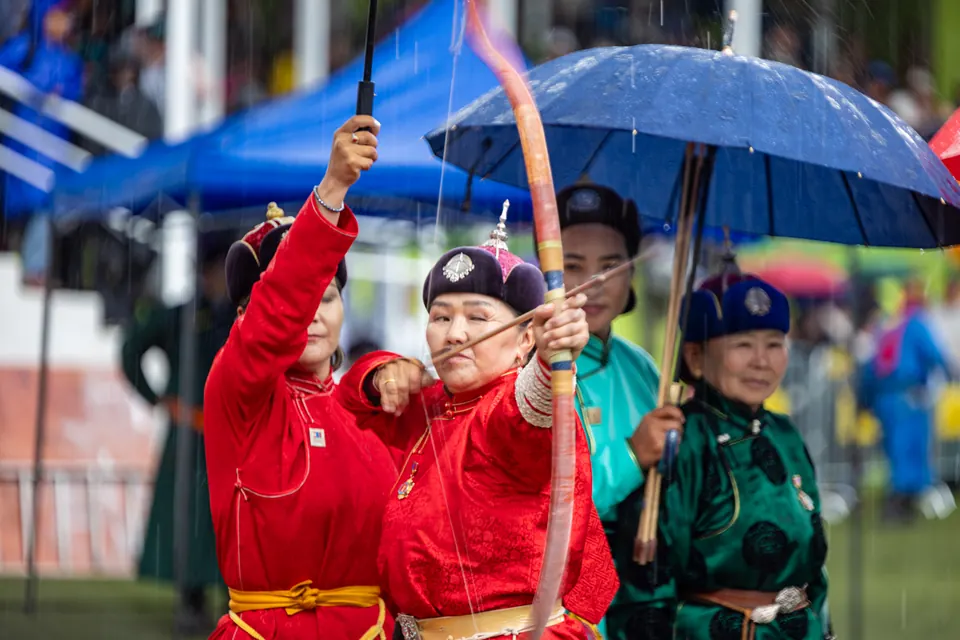
The traditional archery competition, known as "Bai Kharkhaa," is held in an open field near the main stadium. Participants use composite bows crafted from layers of horn, bark, and wood. Arrows are traditionally made from willow, with eagle or other bird of prey feathers fixed to the end. Archers wear traditional Mongolian attire—men stand 75 meters from the target, while women stand at 60 meters. The target itself, called a sür, consists of rows of small leather rings laid on the ground, colored gray, red, and yellow. Up to 360 rings may be arranged in lines, though typically 20 to 30 are used during competition. After each shot, judges standing near the target raise their arms in specific gestures to indicate the accuracy of the shot. The archer who hits the most sür rings is declared the winner and earns the prestigious title of "Mergen," meaning "master archer."
Shagai - Anklebone
In recent years, Naadam has welcomed a fascinating addition to its lineup of traditional sports: Shagai Kharkhaa, or anklebone shooting. In this unique game, participants use a miniature crossbow-like tool to flick sheep anklebones (shagai), aiming to hit a target bone or land them in a specific marked zone. The competition is typically held in a dedicated area near the main stadium grounds, offering spectators a chance to witness this blend of precision, tradition, and playful skill up close. More than just a game, Shagai Kharkhaa represents how Mongolia continues to honor its past while innovating—turning a centuries-old pastoral pastime into a structured and celebrated modern sport.
Planning Your Naadam Visit: A Quick Tip
If you’re planning to attend Naadam, it’s good to know that hotel demand peaks during the festival. Room rates often double, and many accommodations are fully booked up to six months in advance. To secure the best options and simplify your planning, consider reaching out to a reputable local tour operator or travel agency—they can handle arrangements early and help you navigate logistics smoothly.
Ready to Experience Naadam?
Interested in joining a guided tour or finding a curated Naadam experience? Explore our recommended Naadam travel packages to make the most of your visit—from prime festival seating to cultural insights that go beyond the arena.